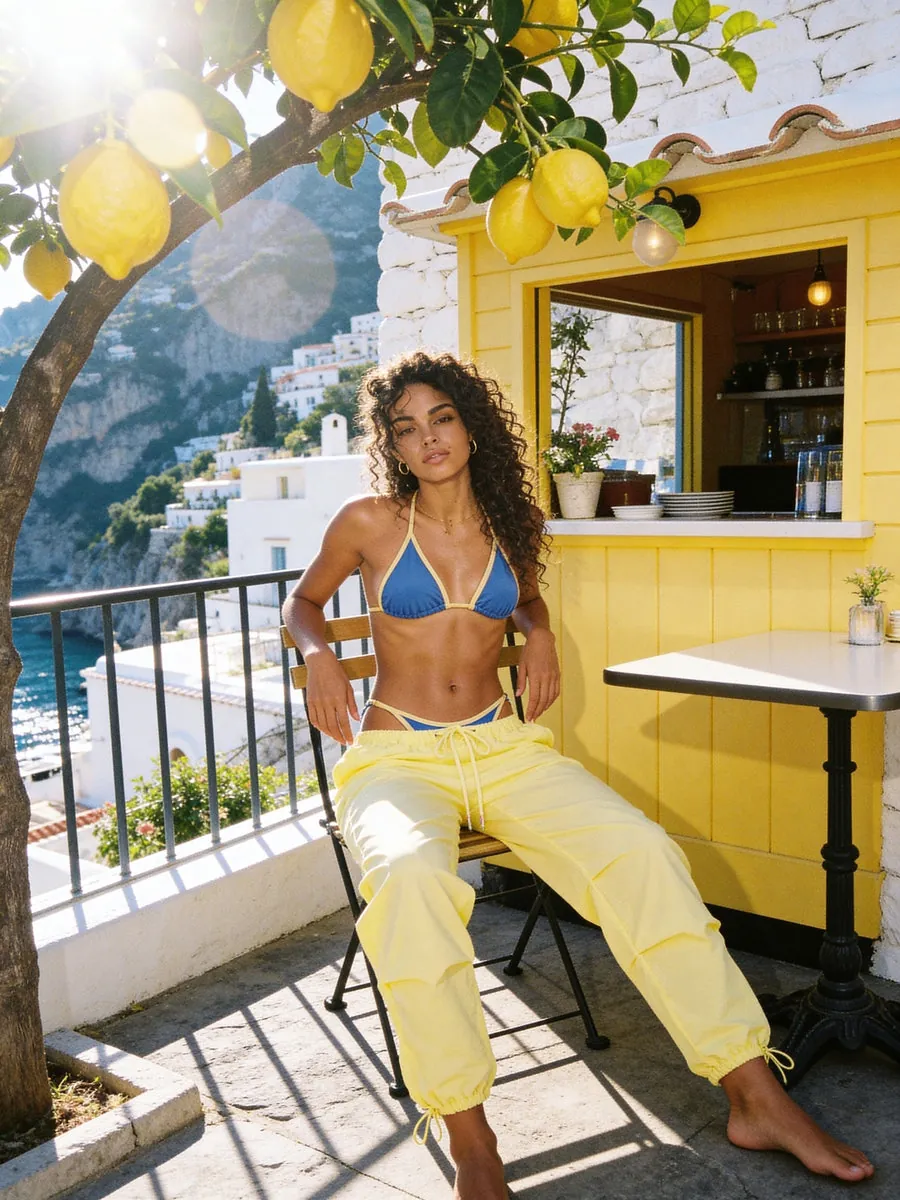
the distinction between swimwear and streetwear has dissolved. what began as bikini tops worn beneath open garments at festivals has become a widespread movement: women moving from water to street without changing clothes.
this is a behavioural change, not a fleeting trend. brands that embrace it design pieces with dual functionality in mind.
what's actually changed
wearing swimwear under clothing used to be vacation-specific, born of convenience. today's approach is deliberate. women select swim pieces intentionally, valuing them as layering basics that stay inconspicuous under tanks or open shirts. manufacturing has caught up: modern bikinis have clean construction, without bulky seams or clasps that create unflattering lines under clothing. clean enough to swim in, flat enough to wear under a hoodie.
what the shift looks like in practice
beach-to-street outfits follow recognisable patterns: triangle tops with relaxed utility pants, solid bikinis under oversized hoodies with visible ties, or swim tops layered beneath button-downs with high-waisted bottoms. effortlessness defines the combinations, and tonal dressing dominates: mint bikinis with white pants, black swim sets with black utility wear.
why it matters for how you buy
swimwear that only works at the beach gets limited wear each year. pieces that layer successfully under clothing become weekly staples, which fundamentally changes their value. the design priorities shift from beach aesthetics to practical function: flat construction, non-catching hardware, intentional visibility.
where it's heading
travel fashion used to require separate wardrobes for the pool and for dinner. now the move is integrated collections where swim and street pieces work interchangeably across contexts. no forced choice between categories.
shop · rush ii bikini · glitch skirt · icon scarf
enjoy responsibly.